
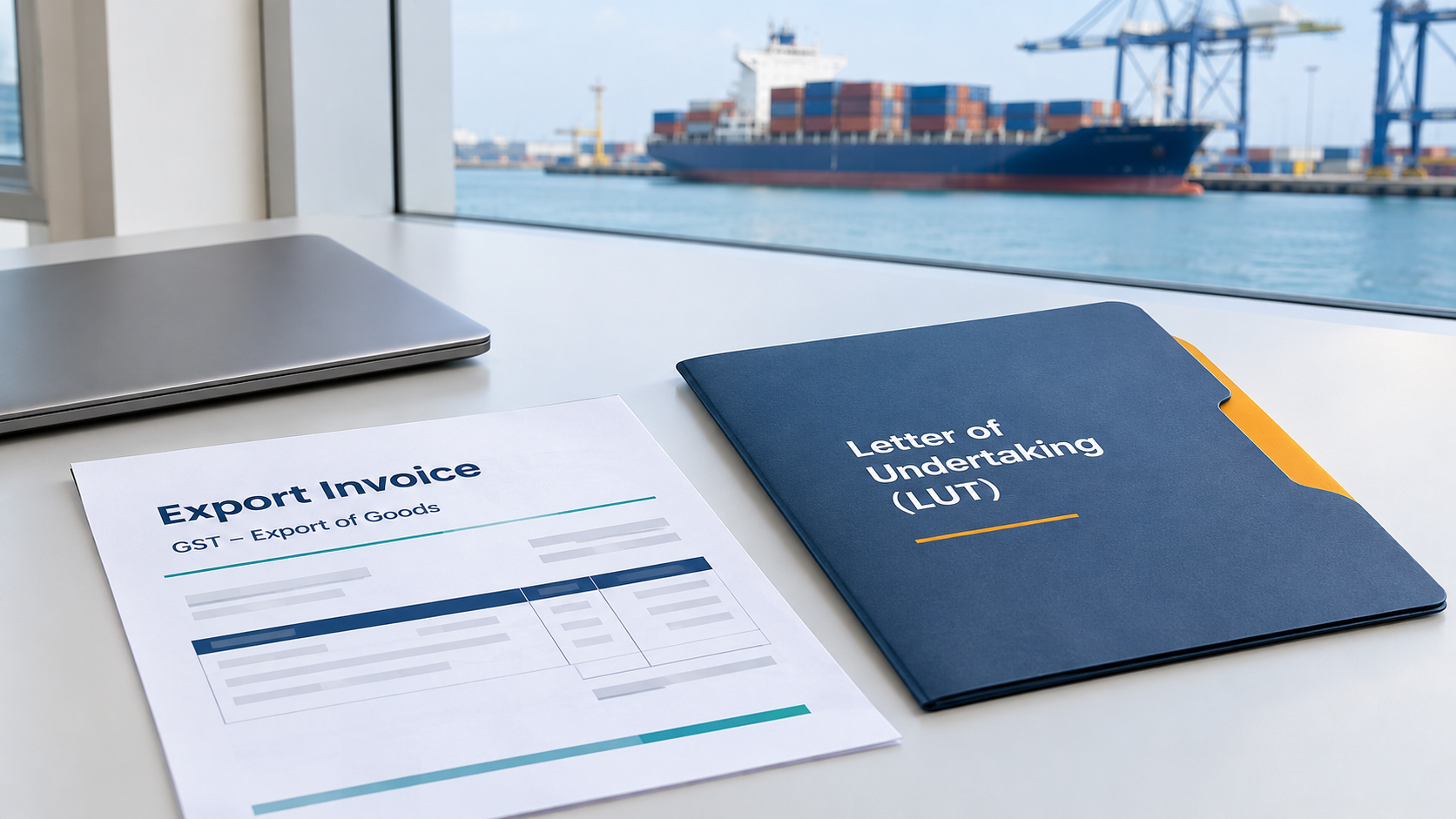
Export Under LUT allows eligible registered exporters to export goods or services without paying Integrated GST at the time of export, subject to applicable GST rules. LUT stands for Letter of Undertaking. Although this route can support export transactions, differences in GST treatment or export records may create questions for businesses.
The issues can relate to the LUT’s validity, the GST route applied to a transaction, differences between documents or input tax credit records. Below are four common issue areas and why they may arise. The reason can vary depending on the exporter and transaction.
Common Export Under LUT Issues
1. Uncertainty about the applicable LUT
An exporter’s records may not clearly show whether the LUT relates to the relevant period or transaction. This may happen when older and newer records are considered together, or when the status of the applicable LUT is unclear to the teams handling export documents.
If there is uncertainty about which LUT information is associated with an export, the transaction may require further review. The issue is specific to the exporter’s records and circumstances.
2. Confusion between the LUT and IGST payment routes
Exports may be made without payment of IGST under an LUT, or on payment of IGST, subject to the applicable rules. These routes have different tax and refund implications. Confusion can arise when a business’s internal records, invoice treatment or refund expectations do not clearly reflect the route used for a particular export.
This can lead to uncertainty about whether the business is dealing with an IGST refund or a refund of eligible unutilised input tax credit. The distinction matters because the underlying transaction and refund basis are different.
3. Differences across GST and export documents
Details associated with an export may appear differently across the invoice, Shipping Bill and GST records. Differences in invoice references, values, exporter particulars or descriptions can make it harder to connect the records to the same transaction.
Such inconsistencies may arise when documents are prepared by different teams or at different stages of an export. Even when the goods have been exported, differences in the records may create follow-up questions about the transaction.
4. Uncertainty around input tax credit and refund records
For eligible exports made under LUT, a refund may relate to unutilised input tax credit, subject to prescribed conditions. Questions may arise when the business’s GST records and export transaction information do not clearly correspond, or when refund expectations are based on a different export route.
The reason for a discrepancy may not be apparent from one record alone. It can depend on the transaction, the GST treatment and the associated refund information.
Why Export Under LUT Records May Need Review
Export Under LUT involves information maintained across GST and export documentation. If the details are unclear or inconsistent, it may become difficult for the exporter to understand the status of a particular transaction or related refund.
The four issues above are common areas of concern, not a step-by-step compliance guide. The cause and appropriate next action depend on the exporter’s transaction and records. A general blog cannot determine the treatment for an individual case.
If your business has questions about an LUT-related GST discrepancy, export documentation or an input tax credit refund, Exim Compliance Partner can review the relevant matter with you. Read our guides to IGST refund on export of goods and documents required for export from India.
Exim Compliance Partner
Smart Compliance. Secure Trade…
Reserve Bank of India
Export Realization, Bank and RBI coordination Support
EDPMS , IDPMS Closure ( RBI Compliance )
What are the documents required for Export
How to Close EDPMS Entries in India
DGFT Licensing – EPCG & Advance Authorization
IRM Settlement & Purpose Code Correction
eBRC for Exporters: 7 Essential Steps to Avoid Delays