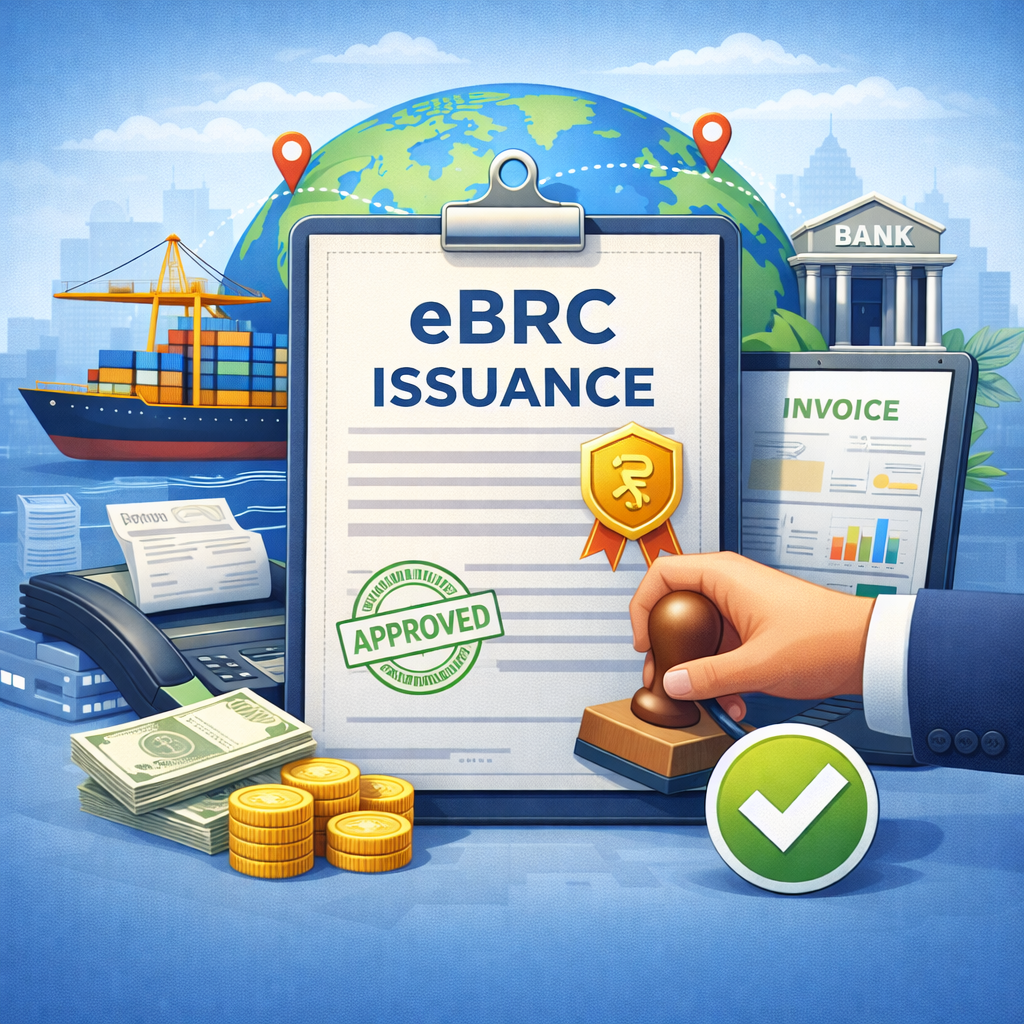
The eBRC issuance process is a crucial part of export compliance in India. An eBRC (Electronic Bank Realization Certificate) serves as official proof that export proceeds have been realized in foreign currency. Without eBRC, exporters may face difficulties in closing EDPMS entries, claiming GST refunds, or availing export incentives under DGFT schemes.
This detailed guide explains what eBRC is, why it is important, how the eBRC issuance process works, documents required, common problems, and best practices, in a simple and practical manner for Indian exporters.
What is eBRC?
eBRC stands for Electronic Bank Realization Certificate. It is an electronic certificate generated by the authorized dealer (AD) bank after an exporter receives payment from a foreign buyer. The eBRC is uploaded by the bank directly on the DGFT portal, making it accessible to exporters and government authorities.
The eBRC contains key details such as shipping bill number, invoice value, realized amount, foreign currency, and date of realization. It is mandatory under RBI and DGFT regulations.
Why is eBRC Important for Exporters?
The eBRC issuance process plays a vital role in export compliance. It is required for:
- Closing EDPMS entries with banks and RBI
- Claiming GST refunds on exports
- Availing DGFT export incentives and benefits
- Proving realization of export proceeds
- Maintaining a clean compliance record
Without a valid eBRC, exporters may face delays in refunds, blocked incentives, or compliance notices from banks.
Time Limit for eBRC Issuance
As per RBI guidelines, export proceeds must be realized within 9 months from the date of export (subject to RBI notifications). Once the payment is received, the bank should issue the eBRC without undue delay. Exporters should regularly follow up with their bank to avoid delays in the eBRC issuance process.
Documents Required for eBRC Issuance
Shipping Bill
The shipping bill is the primary document used to link export shipment details with bank records. Shipping bill number, date, port code, and FOB value must be accurate.
Export Invoice
The commercial invoice helps verify buyer details, invoice value, and payment terms.
Foreign Inward Remittance Certificate (FIRC)
FIRC confirms receipt of foreign currency and supports the realization amount shown in the eBRC.
Bank Advice / Credit Confirmation
This document shows that export proceeds have been credited to the exporter’s account.
Step-by-Step eBRC Issuance Process
Step 1: Receipt of Export Payment
The eBRC issuance process begins when the exporter receives foreign payment through approved banking channels. The remittance should clearly mention invoice or shipping bill reference.
Step 2: Reporting by Authorized Dealer Bank
The authorized dealer bank reports the realization details against the corresponding shipping bill on the DGFT system. Accurate reporting is essential to avoid mismatch issues.
Step 3: Generation of eBRC on DGFT Portal
Once the data is validated, the bank generates the eBRC electronically on the DGFT portal. Exporters can view and download the eBRC by logging into their DGFT account.
Step 4: Linking eBRC with EDPMS
The realized amount reflected in the eBRC is automatically used for EDPMS closure. Any mismatch between shipping bill and realization data may delay closure.
Common Issues in eBRC Issuance
Mismatch in Shipping Bill Details
Errors in shipping bill number, port code, or date can prevent eBRC generation.
Partial Realization of Export Proceeds
If the exporter receives partial payment, the bank must report it correctly. Incorrect reporting can lead to pending eBRC status.
Delay by Bank
Sometimes banks delay uploading eBRC data due to internal verification or compliance checks.
Multiple Invoices Against One Shipping Bill
Improper mapping of invoices and shipping bills can cause discrepancies in the eBRC issuance process.
How to Resolve eBRC Issuance Problems
Regular Bank Follow-Up
Exporters should proactively coordinate with their AD bank once payment is received.
Documentation Verification
Ensure all export documents match in terms of value, date, and reference numbers.
Professional Compliance Support
Export compliance consultants can help resolve complex eBRC issues such as short realization, write-offs, or old pending cases.
Best Practices for Smooth eBRC Issuance
Maintain Accurate Export Records
Consistent and error-free documentation helps speed up the eBRC issuance process.
Monitor DGFT Portal Regularly
Exporters should frequently check eBRC status on the DGFT portal.
Coordinate eBRC with EDPMS Closure
Timely eBRC issuance ensures smooth and quick EDPMS closure.
Conclusion
Understanding the eBRC issuance process is essential for every exporter in India. Timely realization of export proceeds, accurate documentation, and proper coordination with banks are key to avoiding compliance issues. A correctly issued eBRC not only ensures RBI compliance but also enables exporters to claim refunds and incentives without delays.
If exporters face difficulties in eBRC issuance or old pending cases, professional assistance can help ensure smooth and timely resolution.
Know More About eBRC Issuance Process in India